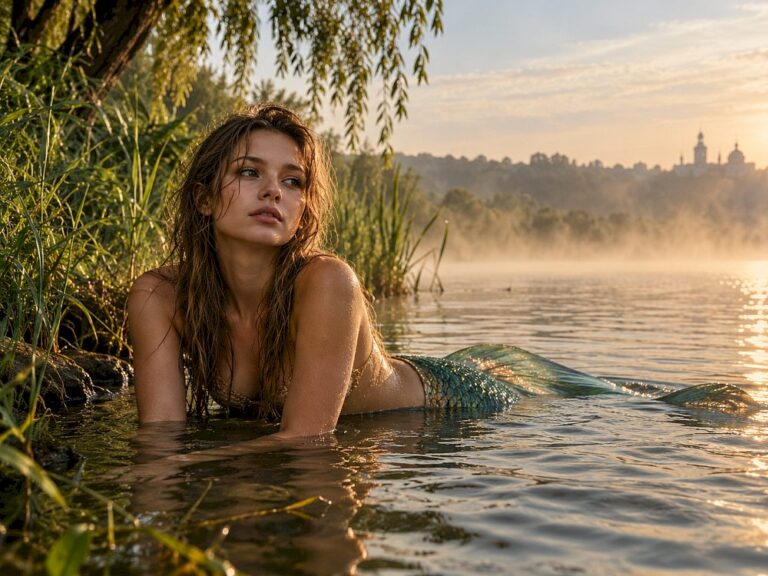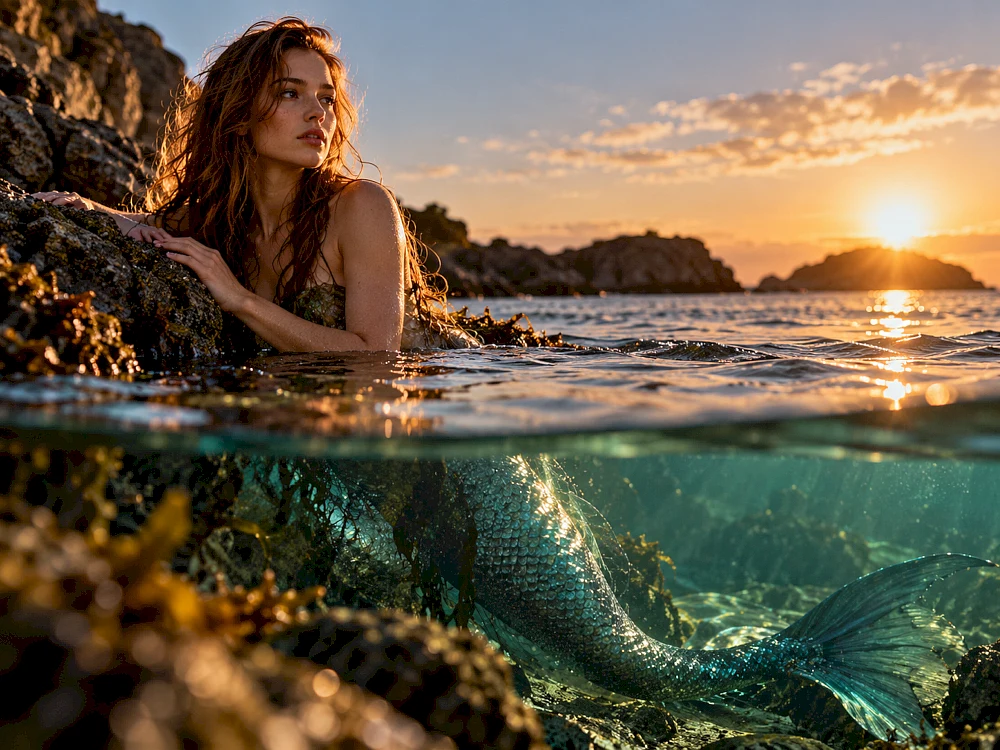
The modern mermaid seems easy to define: a woman above the waist, a fish tail below, long hair and an ability to live in water. If such creatures formed a real biological species, we would expect bodies, skeletons, DNA or unambiguous modern observations.
We do not have them. The US NOAA states that no evidence of aquatic humanoids has ever been found.
That does not mean every mermaid tradition was simply invented from nothing. Several different folk beliefs, real animals, fear of water and ideas about death gradually merged into the modern image.
The Ukrainian rusalka was not a woman with a fish tail
In Ukrainian folk belief, the rusalka was usually imagined as a young long-haired woman associated with a drowned girl or the soul of a child who died unbaptized. She could appear near rivers, in fields or forests, sing, dance and lure people. The Encyclopedia of Ukraine records this older tradition.
The traditional rusalka was therefore a being of folk demonology rather than an aquatic animal. She could be linked to water, but she did not need a fish tail and did not have to remain in a lake or river.
Where the fish tail came from
The modern mermaid absorbed features from classical Sirens and medieval sea-maiden traditions. Ancient Greek Sirens were originally bird-women rather than fish-women, as surviving objects in the Metropolitan Museum of Art make clear.
Over time European art and literature blended several female water beings into a more standardized form: a human upper body, long hair and a fish tail.
What sailors may actually have seen
One famous historical case involves Christopher Columbus, who recorded creatures interpreted as mermaids during his first voyage to the Americas. A common modern explanation is that he saw manatees. The US Fish and Wildlife Service explicitly discusses that tradition.
Manatees and dugongs surface to breathe, have forelimbs shaped as flippers, nurse their young and can briefly look surprisingly anthropomorphic at a distance. A sailor who saw an unfamiliar animal for a few seconds through waves could honestly fit it into a story he already knew.
Why similar legends appeared in different cultures
Water produced similar human experiences across the world: drowning, bodies that were never recovered, dangerous currents, fog, strange sounds and unfamiliar animals. Different cultures did not need to see the same hidden species to imagine female spirits or humanlike beings associated with water.
The Ukrainian rusalka is especially revealing because she was often connected with premature death. In that setting the legend could explain tragedy, warn about dangerous places and give communities a cultural language for people whose lives ended unexpectedly.
Could an unknown species still be hiding in the ocean?
Marine science continues to discover new species, especially in deep water. But a large humanlike animal would need a breeding population. Such animals would leave carcasses, bones, DNA, feeding traces and accidental captures in nets or cameras.
The absence of this evidence matters particularly because mermaids in folklore are usually placed near the surface and coasts, not in isolated abyssal habitats. The biological claim therefore remains unsupported.
So did mermaids ever exist?
If ‘mermaid’ means a hidden biological species that was part human and part fish, there is no evidence that such a species existed.
If the question is whether real things helped create the legend, the answer is yes. Manatees and dugongs were real; drowning and disappearances were real; ritual traditions and fear of water were real. The mermaid could emerge where those experiences met human storytelling.
Disclaimer. This article may discuss legends, hypotheses, interpretations and unverified versions. They are not presented as established facts. Confirmed evidence is kept separate from speculation and unverified claims.