Short answer: the probability that Ukraine will obtain or deploy at scale a non-drone military capability that materially improves its position on at least part of the battlefield by the end of 2028 is estimated at roughly 70%. The strongest candidate is not a single “secret missile,” but an integrated air-warfare system: Gripen and Rafale fighters armed with long-range Meteor missiles, airborne early-warning aircraft, stronger air defence and missile defence. A second major candidate is Ukraine’s own ballistic and cruise-missile capability if successful prototypes can be translated into meaningful serial production.
Forecast details
Probability: 70%
Confidence: 74/100
Horizon: December 31, 2028
Snapshot: October 14, 2026
Base Rate: N/A — there are too few genuinely comparable cases in this war for a reliable historical frequency
“Materially improve the situation” does not mean a weapon that ends the war on its own. YES requires a persistent operational effect lasting at least three months: for example, a measurable reduction in Russia’s ability to employ guided glide bombs on specific sectors, sustained disruption of Russian logistics and military infrastructure in operational depth, or a new degree of air control that directly improves Ukrainian freedom of action.
The effect must be confirmed not only by Ukrainian officials or manufacturers but also by at least one independent international source or specialist study. If new systems arrive but remain too scarce to produce a persistent operational result, the forecast resolves RESOLVED — NO. If large-scale combat ends early enough that battlefield impact can no longer be tested, the forecast may resolve VOID.
The most plausible path runs through air warfare
Russian guided glide bombs have become one of the most serious pressures on Ukrainian defence. Russian aircraft can launch them without entering the most dangerous portions of Ukraine’s air-defence envelope.
Ukraine’s Ministry of Defence has explicitly described the planned Gripen + Meteor combination as a way to push Russian glide-bomb carriers farther from the front.
On June 30, 2026, Ukraine and Sweden signed an agreement covering 16 new Gripen E fighters, while Gripen C/D aircraft are expected earlier through military assistance. A parallel French track includes Rafale fighters, Meteor-class air-to-air weapons and guided air-launched munitions.
The key factor, however, is not the aircraft name. Gripen or Rafale matter most when connected to long-range missiles, radars, airborne early warning, ground-based air defence and a common air picture. Ukraine has already received the Swedish ASC 890 airborne early-warning aircraft, which can improve detection and coordination.
The second candidate is Ukraine’s ballistic-missile programme
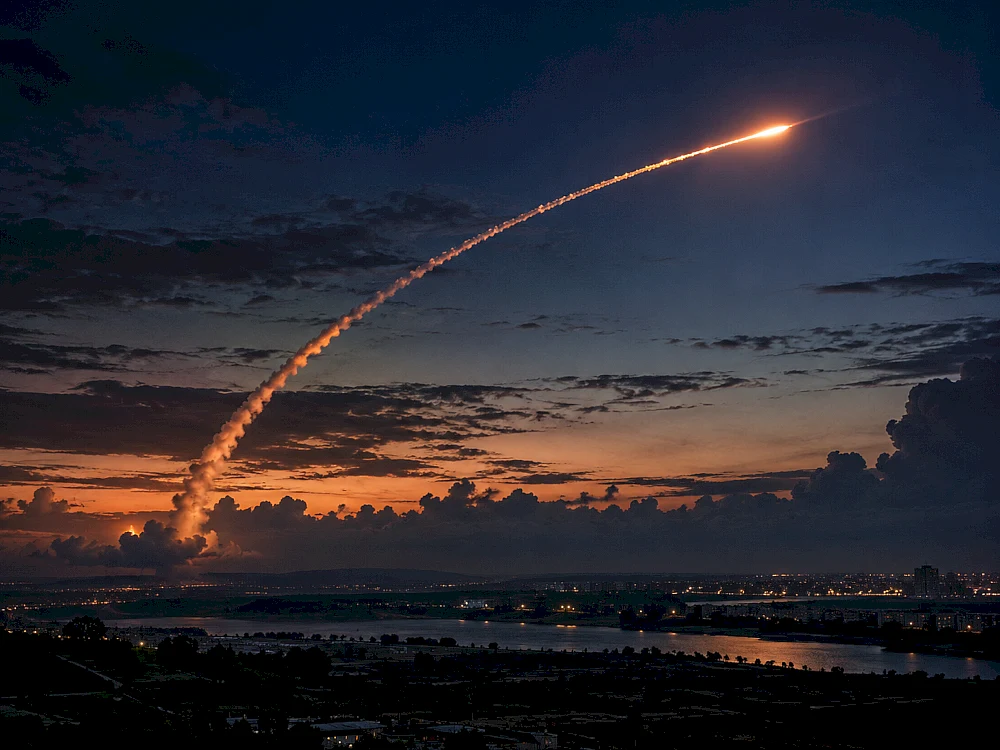
On August 6, President Volodymyr Zelenskyy said officially that Ukraine was working on domestic ballistic missiles and that tests had shown strong potential. The critical next step is turning successful testing into a repeatable combat capability.
Between prototype and battlefield system lie serial production, reliability, accuracy, inventory size and the ability to replenish stocks. Production scale, rather than the headline range of a single missile, is the most important indicator.
The 2022 experience with HIMARS showed that long-range precision fire can alter enemy behaviour. RUSI has emphasized that the effect came from a wider system of intelligence, precision, software, ammunition and operational organization rather than from the launcher alone.
The missile programme is gaining an industrial foundation
A major shift is the move from one-off foreign aid packages toward localized and joint production. European funding is increasingly directed toward Ukrainian-made missiles, while French-Ukrainian arrangements include licensed production involving SCALP, AASM and Aster 30.
Local production does not eliminate dependence on imported components, but it can gradually replace repeated transfer decisions with a more reproducible production cycle.
A third component is stronger air and missile defence
Damage to energy, railways, depots, repair facilities and logistics eventually affects front-line forces. Protecting the rear is therefore part of battlefield resilience.
Ukraine is moving toward SAMP/T NG and European-Ukrainian missile-defence projects including FREYJA. If these programmes reach scale, Ukraine could gain a more reproducible channel for replenishing expensive interceptors.
Could Ukraine develop its own equivalent to Russian glide bombs?
Ukraine has tested its own guided aerial bomb, while licensed AASM production expands this category further. Mass use could theoretically provide some of the firepower advantage Russia has gained from glide bombs.
But an air-launched weapon is only as useful as the aircraft’s ability to reach a safe release point. Guided bombs therefore do not look like the leading standalone candidate; their value rises sharply when combined with stronger fighter aviation and long-range air-to-air missiles.
The war has demonstrated the limits of the “wonder weapon”
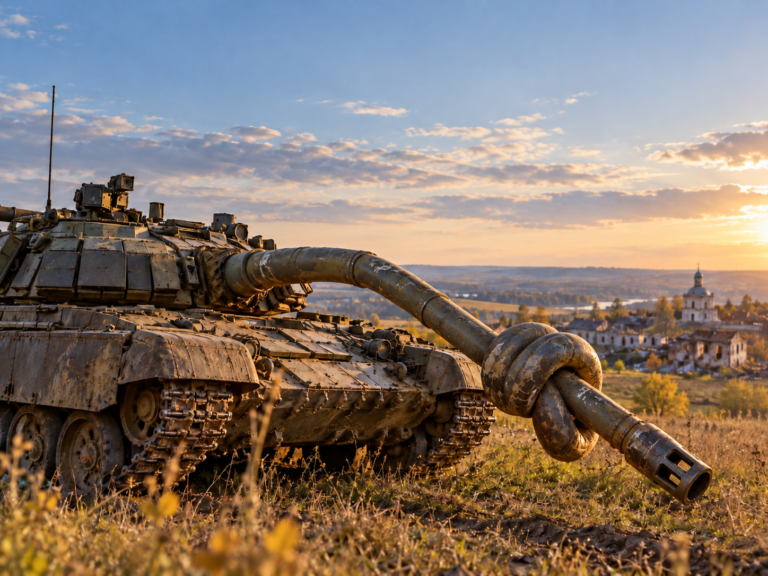
HIMARS, Western tanks, Patriot, ATACMS and F-16 were all described at different times as potentially transformative systems. Each changed parts of the war, but none altered the overall balance by itself.
The central lesson is that technological advantage must be translated quickly into production scale, ammunition depth and new operational organization. Otherwise, the enemy adapts before the new capability produces a strategic effect.
What could become the main factor by 2028
| Scenario | Probability | What it would mean |
|---|---|---|
| Integrated air system: Gripen/Rafale + Meteor + radars + air defence | 35% | Russian tactical aviation is forced to operate farther from the front, reducing glide-bomb pressure on some sectors |
| Scaled Ukrainian missile capability | 20% | Serial ballistic and cruise missiles create persistent operational pressure |
| Several systems combine without one dominant weapon | 15% | Aviation, missiles, air defence, artillery and guided weapons together create a sustained improvement |
| New systems arrive, but scale remains insufficient | 25% | Shortages and Russian adaptation prevent a persistent operational shift |
| VOID because the character of the war changes | 5% | Large-scale combat ends or pauses before the effect can be tested |
The combined probability of scenarios producing a persistent operational improvement is 70%.
What would raise or lower the forecast
Probability would rise if Gripen C/D aircraft with Meteor enter Ukrainian service in 2027 and independent evidence shows a change in Russian tactical aviation behaviour. A move from Ukrainian ballistic-missile testing to regular serial production would be a second strong indicator.
The estimate would fall if deliveries remain small, modern platforms arrive without sufficient ammunition, or Russia adapts faster than Ukraine can scale the new systems.
The decisive change is more likely to be a system than a single weapon
If Ukraine achieves a meaningful non-drone technological shift by the end of 2028, it is unlikely to look like the arrival of one weapon that suddenly changes the war.
The stronger scenario is a wider capability: better awareness of the airspace, longer-range pressure on Russian aviation, stronger defence of the rear, growing domestic missile production and greater independence in long-range strike.
Therefore, the strongest candidate for materially improving Ukraine’s position is not a new tank or a single missile, but the emergence of an integrated European-Ukrainian air and missile warfare system in which a growing share of key munitions and components is produced or assembled in Ukraine.
Forecast History: October 14, 2026 — Probability 70%, Confidence 74/100. Initial snapshot.
This forecast does not claim that the event will happen. It reflects the current estimated probability based on information available at the snapshot date. The estimate may change as new evidence appears.