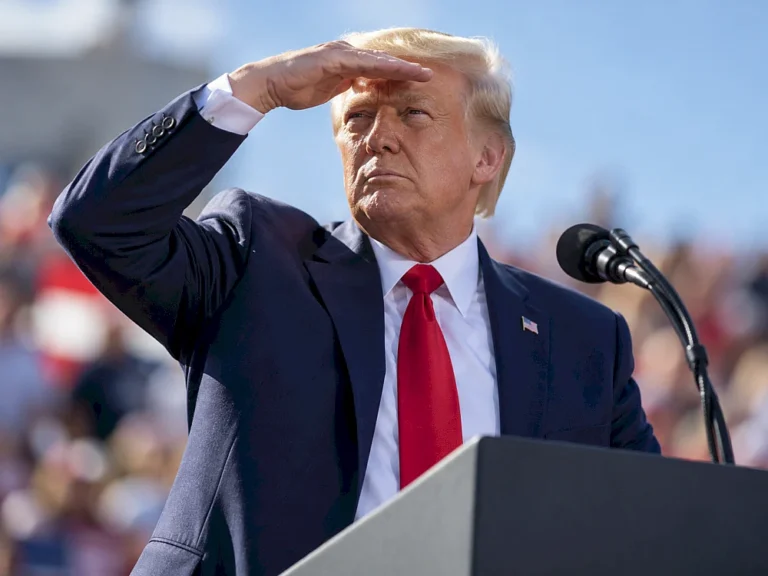
Donald Trump can defend his diesel arrangement with Vladimir Putin in simple terms: Americans need lower fuel prices, and a U.S. president is expected to put the economic interests of his own citizens first. In domestic politics, that argument is easy to understand, especially ahead of congressional elections when prices and the economy remain among voters’ biggest concerns.
The ethical problem lies in the context. Russia is still waging war against Ukraine, its energy sector remains an important source of state revenue, and Washington spent years building sanctions designed to constrain those flows. When the United States creates a special opening for Russian diesel while also criticizing Ukrainian strikes on Russian refineries, a legitimate question follows: is Moscow receiving an economic and political benefit before making a comparable concession?
The evidence supports a more precise conclusion than the slogan that Trump “sold out” to Putin. There is no proof here of personal corruption or a secret payoff. But judged by allied solidarity, consistency of sanctions policy and fairness toward Ukraine, the decision is highly morally problematic — particularly because Russian diesel was not America’s only available option.
What Trump and Putin each gained
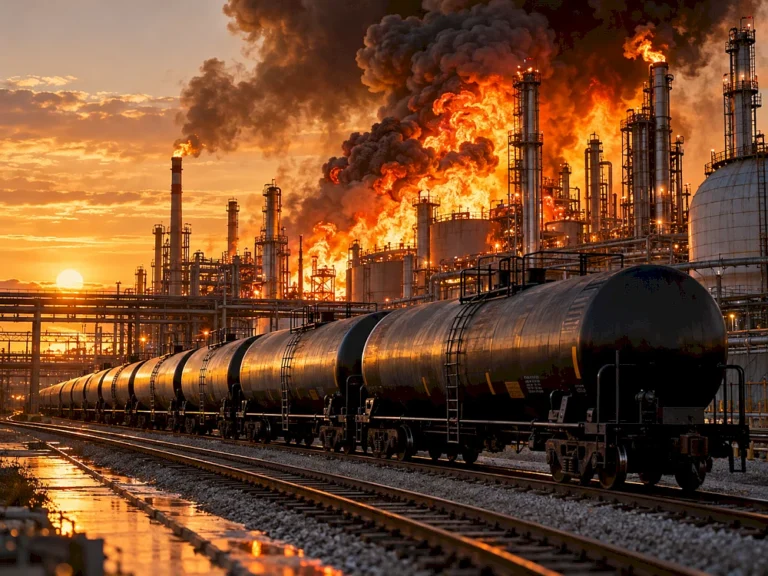
On October 9, the U.S. administration opened a specific sanctions channel for Russian diesel. OFAC issued General License 135, authorizing transactions related to the sale, delivery, unloading and import of Russian-origin diesel. Trump said after speaking with Putin that an initial shipment of more than 300,000 metric tons would be followed by additional supplies. This was therefore more than political rhetoric: it was a concrete exception inside the sanctions regime. The terms are set out in the OFAC license, while Reuters reported the scale of the arrangement.
Trump’s immediate benefit is straightforward. More supply can put downward pressure on prices and give the White House a visible result to show voters. Putin’s gain is broader. Russia can earn revenue from a product entering through a sanctions barrier, while gaining an additional argument against Ukrainian attacks on its refining sector. Once Washington itself has an interest in steady Russian diesel production, strikes on Russian refineries become not only Moscow’s problem but a potential domestic-price problem for the United States.
The ethical issue is bigger than one cargo of diesel
Countries routinely trade with governments whose policies they oppose. Buying fuel from Russia is not automatically immoral simply because the seller is Russia. The difficulty comes from the sequence of policy choices. Washington first builds a system intended to reduce Russia’s energy earnings, then creates an exception while the war continues. At the same time, Ukraine faces pressure to limit attacks on refineries that produce the very exports Russia is now being allowed to sell.
That creates an asymmetry. The aggressor gains a new commercial opening, while the country defending itself faces additional pressure on one of the tools it uses to raise the economic cost of the war. Trump does have a legitimate ethical argument: the U.S. government has obligations to American households, farmers, truckers and businesses. But that defense becomes strongest only if the economic benefit is substantial and the alternatives are either unavailable or clearly worse.
Was Putin really the only source of diesel?
No. The United States is itself a major producer and exporter of distillate fuels. Data from the U.S. Energy Information Administration show that in early October the country was exporting large daily volumes of distillates. That does not mean Washington could simply ban exports without consequences: U.S. refineries operate inside a global market, and abrupt restrictions could disrupt refinery economics, logistics and other fuel prices. But it does show that the real choice was never “Putin or empty gas stations.”
Washington had several other paths. It could try to redirect a portion of U.S. exports toward the domestic market through temporary or voluntary arrangements with refiners. It could rely more heavily on U.S. and allied emergency-stock mechanisms designed for short-term disruptions. Canada is already a natural supplier of distillates to the U.S. market and is geographically much closer, although public data do not establish that Canadian refiners could immediately provide the entire extra volume. Additional cargoes could also be sourced from major Asian refining centers, albeit with higher freight costs and longer delivery times.
The Middle East was a weaker option in autumn 2026 than under normal conditions because refining and shipping disruptions had reduced the availability of finished products. Even so, the central point remains: Russian diesel was a fast and convenient option, but the public record does not show that it was the only workable one.
| U.S. option | Main advantage | Main drawback | Concession to Russia |
|---|---|---|---|
| Russian diesel | Fast access to finished product | Sanctions, political and ethical cost | Yes |
| Redirect part of U.S. exports | Fuel is already produced domestically | Potential disruption to exporters, logistics and global prices | No |
| U.S. and allied emergency stocks | Designed for temporary supply shocks | Finite reserves; not a structural solution | No |
| Canada | Ally and existing supplier | Unclear how much extra volume was immediately available | No |
| Asian refiners | Large refining capacity | Longer route, freight costs and the need to verify crude origin | No |
How Ukraine’s partners are reacting
European allies have not shown much appetite for following Washington’s turn. Public statements from Germany, the United Kingdom and other partners continue to emphasize pressure on Moscow and support for Ukraine. The significance extends beyond one fuel cargo. If the United States demonstrates that sanctions can be relaxed whenever domestic economic pressure becomes intense enough, European politicians who favor renewed energy trade with Russia gain a powerful argument: if Washington can make an exception, why should Europe hold a harder line?
This may prove more important than the immediate value of the diesel itself. Sanctions work not only through individual prohibited transactions but through the expectation that restrictions will remain credible over time. Major exceptions weaken that expectation.
Congress: the criticism is no longer purely Democratic
The congressional response is particularly revealing. A group of senators including both Republicans and Democrats urged the administration to reverse course. In the House, Republican Brian Fitzpatrick announced an effort to block purchases of Russian oil and petroleum products. Associated Press described the dispute as a notable case in which some Republicans were willing to put a traditionally hard line on Russia ahead of loyalty to the president.
It would still be inaccurate to say that Congress or the House as a whole has turned against Trump. Republican leadership continues to defend the administration. What exists is an internal split, not a settled bipartisan consensus.
What do Trump voters think?
There is not yet enough high-quality national polling that asks Trump supporters directly about this specific Russian-diesel arrangement. Claims that his voters have already embraced or rejected it would therefore go beyond the evidence.
We do know why the White House is sensitive to fuel prices. Pew Research Center found that the economy remains a major voting issue, including among Republican voters. If diesel prices fall visibly after the arrangement, many Trump supporters may interpret it as practical dealmaking: the president found additional fuel where it was available. If prices barely move, the political question becomes much harder — what exactly did the United States receive in return for relaxing pressure on Russia?
Skepticism about large-scale aid to Ukraine should not be confused with enthusiasm for benefiting Putin. Those are different attitudes. The political verdict will therefore depend heavily on whether Americans can see a concrete domestic payoff.
So how morally problematic was the decision?
Morality cannot be measured with an objective score, but the decision can be tested against clear principles. It addresses a genuine U.S. domestic concern, which is a serious argument in Trump’s favor. At the same time, it weakens a sanctions principle before Moscow has delivered a comparable concession, creates revenue for an aggressor state, and puts Ukraine in the position of being asked to reduce pressure on infrastructure that has suddenly become economically useful to Washington.
The existence of alternatives matters most. If Russian diesel had been the only credible way to avert a severe U.S. fuel crisis, the ethical defense would be much stronger. But America had domestic production and exports, emergency mechanisms, allied supply channels and other external refining markets. None was cost-free; some were slower or less convenient. They were nevertheless real options.
The fair question is therefore not: “Should Trump have left Americans without diesel for Ukraine?” That binary choice did not exist. The better question is: why, among several difficult ways to ease the shortage, did the administration choose the one that required relaxing pressure on Russia and gave Washington a new economic interest in keeping Russian refineries productive?
If Russian deliveries materially reduce U.S. prices and become part of a broader reciprocal de-escalation, the decision may ultimately look like a controversial but pragmatic maneuver. If prices barely change, Russia keeps the economic benefit and no meaningful concession follows, the moral and political defense of the deal will become much harder to sustain.