For most of recorded-music history, a voice was inseparable from a performance. A singer entered a studio, recorded a part, and the result was a specific recording. New lyrics, a different melody or another language normally required the person to perform again.
Forecast details
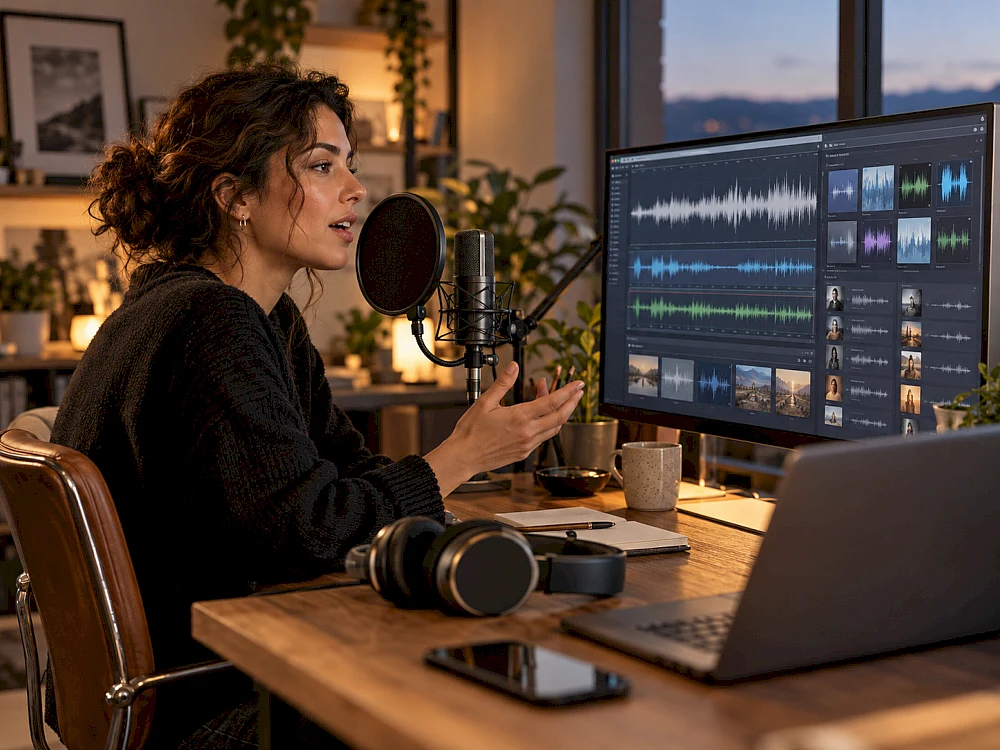
Artificial intelligence is beginning to break that link. A high-quality digital voice model can potentially say words a person never spoke, sing in another language, generate new performances or be used in new works without another recording session. In that world, value no longer sits only in the sound recording. It also sits in the lawful ability to reproduce a recognizable voice.
ORBK.NET’s forecast is that the probability of an authorized digital voice becoming a separately licensable commercial asset across professional music and the wider content industry by the end of 2035 is about 80%. Confidence is 75/100.
“Digital asset” here does not mean cryptocurrency or an NFT. It means the ability to separately authorize, license, restrict and monetize a digital model of one’s voice independently of any single recording.
When a voice stops being just a recording
The distinction between a sound recording and a voice model is fundamental. A license to a song permits use of an existing recording within agreed terms. A voice model can potentially create a new performance: different words, a new melody, an advertisement, game dialogue, dubbing or an audiobook.
The music industry has already begun separating those rights contractually. SAG-AFTRA’s current Sound Recordings Code defines a Digital Voice Replica and requires consent and compensation for its use in a released recording. The SAG-AFTRA rules are an important signal: rights in a normal performance and rights to digitally reproduce a voice are increasingly treated as separate questions.
A market is emerging for licensing the ability of a voice to speak
In 2024 Universal Music Group entered an agreement with SoundLabs allowing UMG artists to create high-fidelity vocal models trained on their own voice data while retaining control over ownership and artistic approval. MicDrop supports voice-to-voice, speech-to-singing, language transposition and other transformations. The UMG–SoundLabs agreement matters because the voice model exists as a controlled capability beyond one finished track.
The economic model is even more explicit in ElevenLabs’ Voice Marketplace. In 2026 the company reported that more than 10,400 voice creators were earning on the platform and cumulative payouts had exceeded $22 million. Those are company-reported figures rather than an estimate of the entire market, but the ElevenLabs data show a working model of “authorized voice → usage terms → recurring compensation.”
Law is still catching up with the technology
The largest uncertainty is not synthesis quality but what exactly the law says belongs to the individual. A voice is not the same thing as a particular recording. Performer rights, sound-recording rights, personality/publicity rights, contracts and platform rules can all overlap.
In 2024 the U.S. Copyright Office concluded after a dedicated study of digital replicas that existing protection had important gaps and recommended a federal law against unauthorized distribution of realistic replicas of a person’s voice or appearance. The Copyright Office recommendation also proposed that the new right should be licensable with safeguards — a particularly relevant signal for a future legitimate market.
Tennessee moved further with the ELVIS Act, adding voice to protected personal rights and defining it to include a recognizable simulation of an individual’s voice. Official ELVIS Act information also describes the right as licensable.
None of this means every country will recognize “ownership of a voice” in the same way by 2035. A more likely structure is a bundle: a person’s right to control a replica + the technical model + a contract governing a specific use.
Why such an asset can become valuable
A famous singer’s voice already has economic value, but much of it is currently realized through the person’s physical participation: recording, touring, advertising or narration. A digital model can separate part of that value from physical presence.
An artist could authorize an official localized version of a song, an actor could license a voice for a game, and a celebrity could approve branded use only for a particular territory and period. As voice synthesis becomes easier, technical scarcity falls. What becomes scarce is verified legal permission.
The most valuable component of a digital voice may therefore be not the model file itself but the rights package defining who may use it, where, for how long and for what kind of content.
People are unlikely to sell their voices “forever” at scale
A voice is too closely tied to identity and reputation. If a model can advertise a product, sing a new song or say words the person never uttered, unlimited transfer creates major risks.
The more plausible model is licensing rather than permanent sale. One agreement may cover advertising, another dubbing, another music. Terms can vary by language, territory, duration, exclusivity and permission to further train the model. The voice becomes an asset through a managed bundle of rights.
Scenarios to 2035
| Scenario | Probability | What happens |
|---|---|---|
| Voice becomes a separately licensed digital asset | 60% | Authorized voice models spread across music, advertising, games, dubbing and audio content, with digital-voice rights contracted separately from a specific recording. |
| Voice becomes part of a broader digital identity | 20% | The market develops around packages of voice + likeness + avatar + persona, while voice still receives distinct usage and compensation terms. |
| Digital voices remain a professional niche | 15% | Celebrities, voice actors and large companies use the technology, but licensing practices do not become broadly standardized. |
| Legal and reputational risks constrain the market | 5% | Regulators, courts, unions and artists limit digital replicas so heavily that they remain mainly internal tools. |
What would change the forecast
The estimate will rise if major music groups build systematic licensing programs for authorized voice models, several large platforms offer transparent royalty systems, and digital-voice clauses become a normal separate element of contracts. An especially strong signal would be an interoperable standard carrying machine-readable information about owner, consent, permitted uses and license term.
The forecast will fall if voice cloning remains mostly a demo technology, major labels avoid commercial licensing of artist models, or law sharply limits even consensual generative voice use. Unauthorized deepfakes do not raise this probability by themselves: the forecast is about a controlled, paid and verifiable market.
The scarce asset may be permission, not the voice copy
The internet made copying music almost free without eliminating the value of music rights. Voice may follow a similar path. When almost anyone can technically imitate a timbre, economic value shifts toward authenticity, consent and a clean legal license.
As of the 1 October 2026 snapshot, the probability that an authorized digital voice becomes a separately licensable asset in the professional music and content industries by the end of 2035 is estimated at roughly 80%.
Forecast card
| Forecast ID | MUSIC-VOICE-2035-01 |
|---|---|
| Forecast question | Will a recognizable person’s digital voice model become a separately licensable commercial asset in the professional music and content industries by 31 December 2035? |
| YES criterion | At least 2 of UMG, Sony Music and Warner Music have a publicly confirmed practice for separately authorizing/licensing reusable digital voice replicas; at least two major international commercial platforms let owners license authorized human voices for new synthetic performances with defined compensation; and at least one major industry agreement or active legal regime separately regulates consent for digital voice replicas. |
| NO criterion | The main market conditions are not met by the deadline. |
| Resolution date | 31 March 2036 |
| YES probability | 80% (working range 75–85%) |
| Confidence | 75/100 |
| Snapshot date | 1 October 2026 |
| History | Initial snapshot |
This forecast was prepared using the ORACLE Foresight Engine methodology.
Disclaimer. This forecast does not claim that the event will occur. It presents a current probability estimate based on the information available at the time of the forecast. The estimate may change as new information appears.