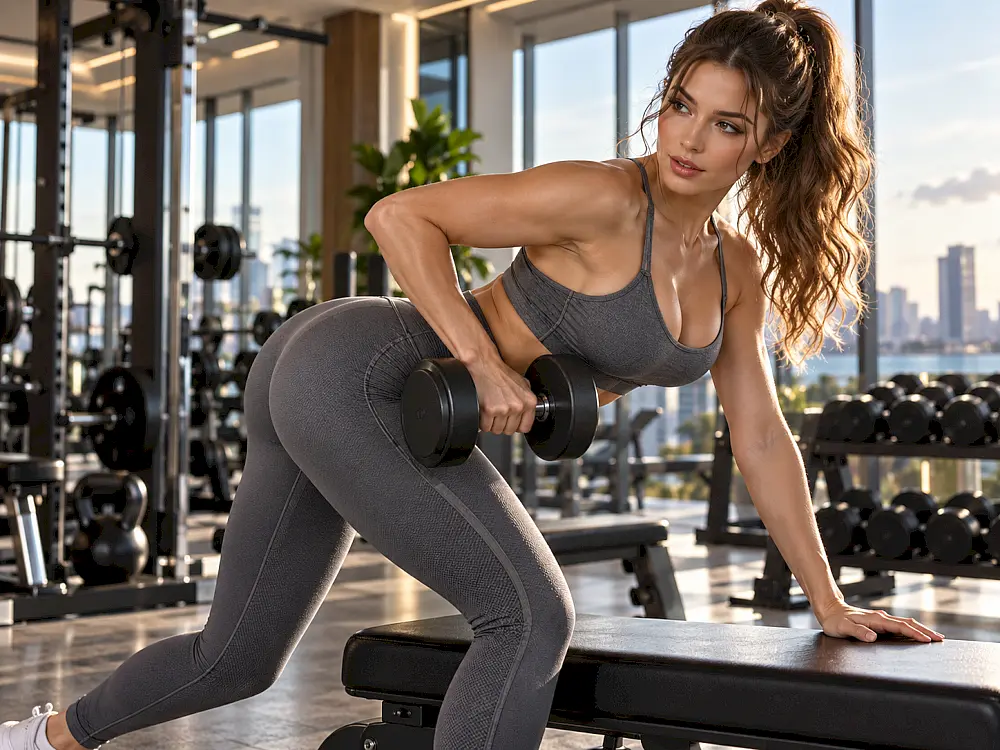
Some clothes still belong to a place in our minds. A blazer suggests the office, pajamas belong at home, and sportswear once clearly belonged to exercise. Leggings have largely escaped that logic. People wear them to yoga, on school runs, on flights, for coffee, around the city and sometimes to work or dinner. One item now moves through settings that, a few decades ago, would have required very different wardrobes.
This did not happen simply because leggings are comfortable. Their rise depended on several changes arriving together: technology produced fabrics that could cling to the body without restricting movement; fitness culture made the silhouette familiar; the street stripped it of an exclusively athletic meaning; office norms moved toward comfort; and fashion stopped treating a sports origin as a problem. Leggings turned out to be unusually well suited to a day in which the same person may move through several social roles without wanting to change clothes.
First, the fabric had to exist
Modern leggings are difficult to imagine without synthetic stretch fibers. In 1958 DuPont chemist Joseph Shivers developed the fiber that later became widely known under the Lycra brand. Compared with the rubber threads used in earlier elastic garments, the material was lighter, could stretch dramatically and return to its original shape. Even a relatively small amount of elastane could make fabric fit more closely without turning the garment into a rigid shell. The material’s history is described by LYCRA itself.
The consequences quickly moved beyond underwear. Swimwear, dancewear, sports uniforms, hosiery and eventually everyday clothes gained a new quality: a garment could move with the body and still recover its form. That technical change contains one of the reasons leggings would later become so successful. Conventional trousers have a structure of their own — waistband, fastenings, pockets, seams and space around the leg. Leggings sit much closer to a second layer of skin and demand far less adjustment of movement to clothing.
Fitness made the tight silhouette ordinary
By the late 1970s sportswear was already moving beyond strictly athletic use. The Fashion Institute of Technology notes that designer Norma Kamali helped bring sweatshirts, leotards, jumpsuits and leggings into fashion before that look became an emblem of the following decade. In the 1980s the fitness boom, dance aesthetics, aerobics and widely watched workout videos made the silhouette part of mass culture. The FIT archive shows how quickly functional sports garments began crossing into everyday fashion.
The change was bigger than a new trend. Close-fitting bodies had previously belonged to relatively specific contexts: dance, sport, stage performance and sometimes underlayers. Fitness culture made that outline public and ordinary. A visible body shape could now suggest activity, training and self-care as well as sexuality or display. Those associations later fed into what became known as athleisure — clothing designed to move between exercise and everyday life. Academic work on athleisure describes exactly this merging of functional sportswear and general consumption.
The crucial journey was not “gym to fashion” but “gym to street”
Once leggings moved outside exercise, the key change was social rather than technical: wearing them no longer had to be justified by a workout. A person could stop at a café, supermarket or shopping center without looking as though they had simply forgotten to change.
The garment itself barely needed to change. Its surroundings did the work. With trainers and a sports jacket, leggings remained athletic. With an oversized sweater they became casual. With a coat, shirt or blazer they could be folded into a city outfit. In that sense, leggings stopped being a complete “gym look” and became a flexible base on which several different looks could be built.
How leggings reached the office
Leggings never became universally accepted office wear. In a bank, courtroom, government office or company with a strict dress code they can still be inappropriate. What changed was the office itself: many workplaces moved closer to clothing that would once have seemed too informal.
This process began well before the pandemic. Business wardrobes were already becoming less formal, trainers entered offices, and a suit was no longer an everyday requirement in many professions. Remote and hybrid work accelerated the shift sharply. McKinsey described the growth of athleisure and the wider “casualization” of clothing as trends that predated COVID-19 but gained further momentum through working from home and hybrid routines. Its analysis helps explain why leggings did not so much conquer the office as help change what people expect workplace comfort to feel like.
The influence extended beyond leggings themselves. Tailored trousers adopted stretch fabrics, concealed elastic waists, softer construction and sports-inspired fits. An entire category emerged that tries to look like conventional city or work clothing while feeling closer to activewear.
WOW:
- >>> Is Homo sapiens Still Evolving Right Now?
- >>> Why Does Tight-Fitting Clothing Attract So Much Attention?
- >>> Why Do We Eat When the Body Is No Longer Hungry?
- >>> Is AI Turning the Female Body Into an Unrealistic Beauty Standard?
- >>> Shiny Clothing and the “Second Skin” Effect: Why Does It Change How We See the Body?
Fashion eventually stopped apologizing for the sports origin
High fashion repeatedly takes practical clothing and frees it from its original purpose. Jeans, military jackets, work boots and T-shirts all followed that route. Leggings did too. Once the silhouette became ordinary on the street, designers no longer had to prove that it could be worn. They could simply play with it: leather finishes, stirrups, capri lengths, shine, prints, high waists and flared hems.
There is a certain irony in that transition. Leggings became fashionable partly because for years they had represented almost the opposite of fashion — the easy thing people wore when they did not want to build a complicated outfit. Fashion eventually turned that lack of effort into a style of its own.
Why leggings and not any other pair of sweatpants?
Comfort explains a lot, but not everything. Soft sweatpants are comfortable too, yet they never gained the same ability to move from a treadmill to a more dressed-up evening look. Leggings are compact, require little tailoring, work easily with layers and place almost no restriction on movement. At the same time, they preserve the body’s silhouette, which means they can function as part of an aesthetic image rather than only as practical clothing.
Jeans can emphasize shape, but their material is more structurally present on the body. Sweatpants are comfortable but create volume of their own and obscure the outline. Leggings occupy an unusual middle ground — somewhere between clothing and a second skin.
Universality creates its own backlash
Whenever a garment becomes nearly ubiquitous, a reaction eventually appears. In 2025 Vogue described a generational argument over gymwear, with some younger consumers moving away from the sleek, fitted sets associated with millennial athleisure toward looser shorts, oversized T-shirts and a less polished gym aesthetic. The debate shows how quickly a norm can produce a counter-style.
But two things should be separated. Leggings can lose their status as the most fashionable silhouette of a particular season and later return. It is much harder to reverse what they taught consumers to expect: everyday clothes should stretch, allow movement, work across several situations and avoid forcing people to change outfits repeatedly during the day.
What leggings reveal about the 21st century
The popularity of leggings may say as much about the structure of modern life as it does about fashion. Different activities once came with visibly different clothes. People changed for work, sport, home, walks and evenings out. The borders between those parts of life were reflected in the wardrobe.
A modern day is less predictable. Work may happen at home or in a café. It may be followed immediately by exercise, shopping, driving or meeting friends. The smartphone made work portable; leggings became one of the garments that are similarly portable between contexts.
That is why the route “sport → street → office → fashion” is not simply a story about athletic trousers becoming stylish. It is a story about the meaning of appropriate clothing changing. Leggings became almost universal not only because fashion allowed sportswear into public life, but because many people stopped wanting clothes to announce, every few hours, which mode of life they were currently in.