Category Forecasts & Analytics
What is most likely to happen next and why?
In the ORBK.NET Forecasts and Analysis section, we examine events and processes that may shape the future. We are interested not only in what is happening now, but also in why it is happening, what forces are driving change, where those changes may lead, and what new facts could alter the direction of events.
Not every article in this section is a forecast. Analysis helps explain the current situation, its causes, contradictions, and possible consequences. A forecast is made when a future event can be defined clearly enough, given a specific time horizon, and later checked against what actually happened.
How we analyse the future
For forecasting and scenario research, ORBK.NET uses its proprietary technology, ORACLE Foresight Engine.
It provides a systematic way to combine verified facts, historical context, current signals, and possible future scenarios. Detailed algorithms and internal rules remain part of the project’s proprietary research framework. What matters to the reader is the result: clear reasoning, an assessment of probability, an honest view of uncertainty, and an explanation of what could change the forecast.
We do not present forecasts as statements of future fact. Even a high probability does not mean that an event is certain to happen. When significant new information appears, an assessment may change.
At the same time, earlier forecasts are not rewritten as though later information had been known from the start. This makes it possible to compare an original assessment with the actual outcome, identify mistakes, and understand which factors turned out to matter more than expected.
What we explore
Forecasts and Analysis covers a wide range of subjects, so ORBK.NET articles are organised into thematic categories. A single topic may overlap several fields, but its main category is determined by the central focus of the article.
Geopolitics — wars, international relations, alliances, sanctions, diplomacy, and shifts in the global balance of power.
Economics — inflation, employment, production, trade, economic cycles, and major changes in national and global economies.
Business — companies, competition, business models, corporate decisions, emerging markets, and the future of individual industries.
Finance — currencies, banks, financial markets, gold, public finance, and other processes involving money and capital.
Technology — artificial intelligence, robotics, computing, digital platforms, and technological changes that may affect work, business, and everyday life.
Energy — oil, gas, electricity, nuclear and renewable energy, energy storage, and the transformation of the global energy system.
Science — space, physics, biology, medicine, new discoveries, and questions about which scientific breakthroughs could reshape the future.
Society — demographics, work, education, human behaviour, cultural change, and the interaction between society and new technologies.
The Future — long-term changes that extend beyond a single industry, from lifestyles and professions to new forms of interaction between people, technology, and the environment.
Sports — events and outcomes where a forecast can be clearly recorded and later verified.
Film and Television — the future of the film industry, streaming platforms, franchises, animation, production technologies, and audience behaviour.
The Future of Music — changes in how music is created and consumed, streaming, artificial intelligence, music formats, rights, artists, and the wider music industry.
Other ORBK.NET analytical directions also include Philosophy of the Body, Natural Parallels, Myths and Mysteries, and other subjects where we can examine patterns, test competing explanations, or ask meaningful questions about the future.
Not to guess, but to test
The purpose of ORBK.NET is not to produce as many bold predictions as possible. When there is not enough evidence for a responsible forecast, the subject remains analytical.
When a forecast can be made, the initial probability is only part of the work. What also matters is what actually happened, why the outcome did or did not match expectations, and what can be learned from it for future research.
The purpose of Forecasts and Analysis is to better understand which scenarios currently appear most likely, why they do, and what evidence could change that assessment.
ORBK.NET – Making sense of reality. Seeing the context.
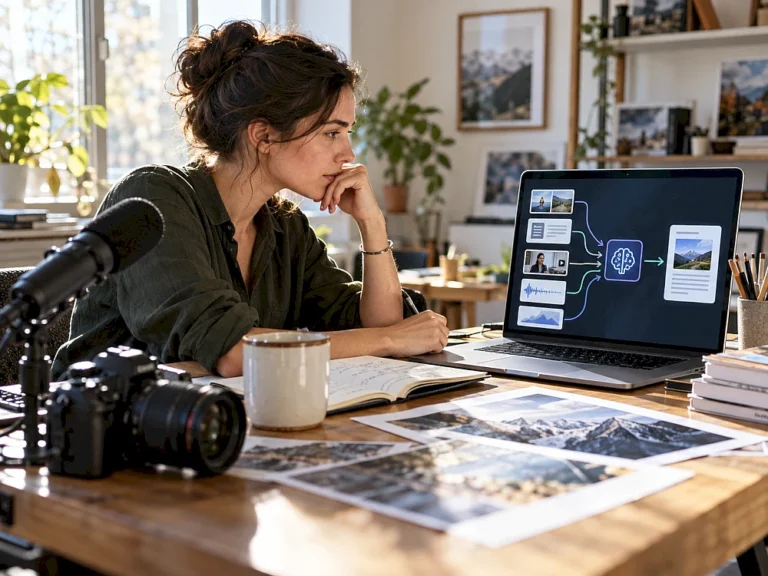
Who Will Create Information for AI If Websites Can No Longer Make Money From It?
In short: if search engines and AI assistants increasingly answer users without sending them to the source, the internet will not stop producing information. Its economics will change. Governments, universities, companies, laboratories and users will continue creating large amounts of…
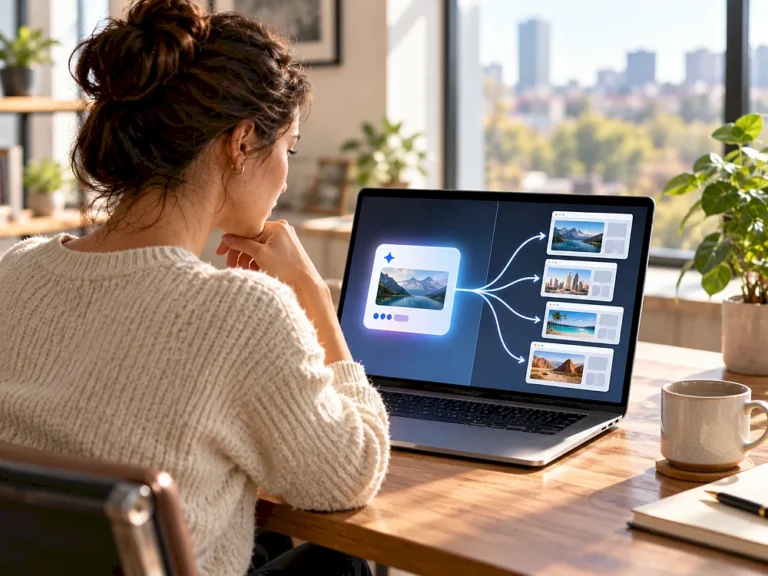
What Happens to the Internet If People Stop Clicking Through to Websites?
In short: if more users get complete answers without leaving search, the web will not disappear, but its economics will change. The most exposed sites will be those whose main value can be compressed into a few AI-generated sentences. Sites…
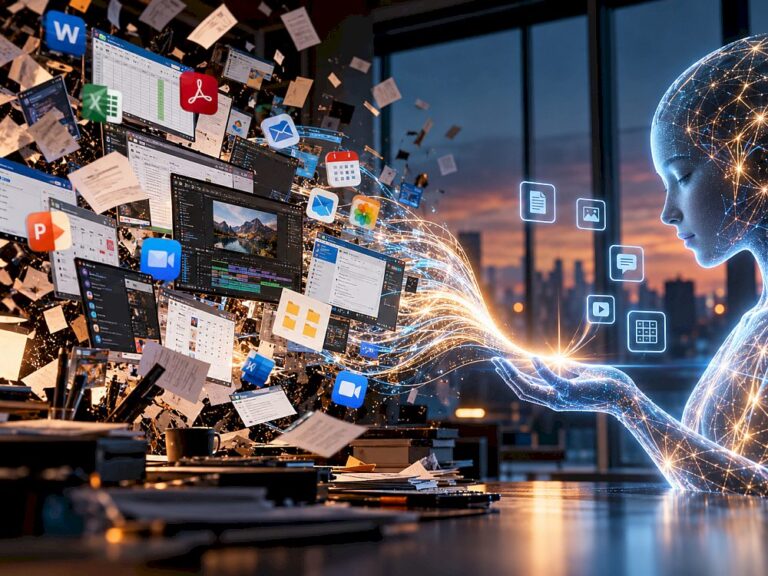
Will One AI Replace Dozens of Familiar PC Apps?
Today, computer work still usually begins by choosing an application. Need to write? Open Word. Calculate a budget? Excel. Build slides? PowerPoint. Edit a photo? Photoshop. Find a file? File Explorer. Edit video? DaVinci Resolve or Premiere. In 2026, another…
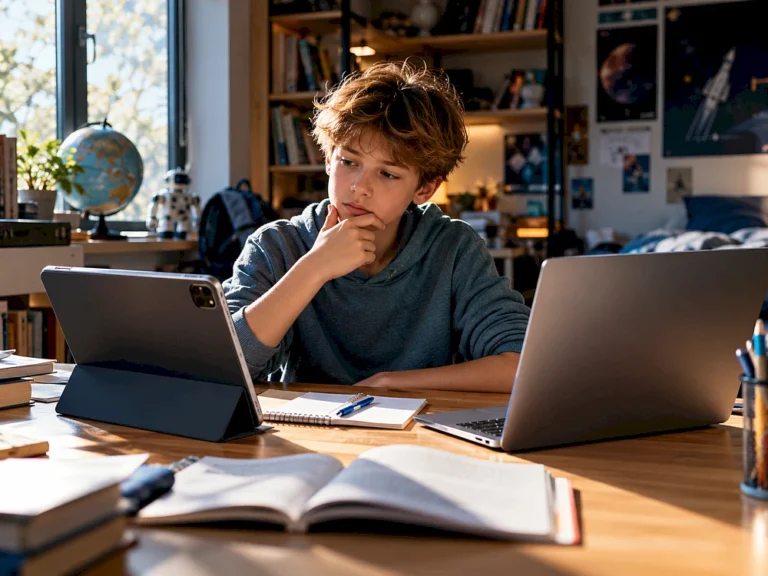
Laptop or Tablet for Studying: Which Is Better?
If you can buy only one device for school or university, a laptop is still the more universal choice for most students. It is better for long papers, spreadsheets, presentations, specialist software, coding and workflows that require many windows at…
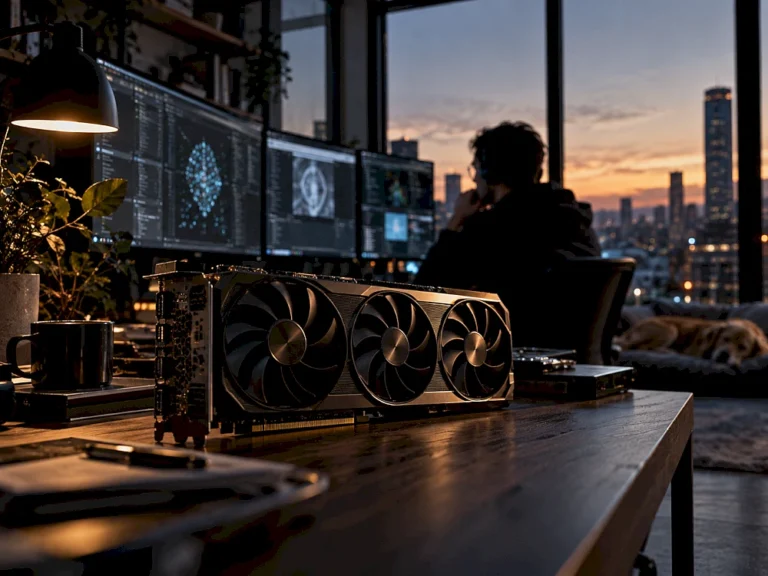
What GPU Will Local AI Need in 2030 and Will 16GB VRAM Be the New Minimum?
Until recently, most buyers judged graphics-card memory almost entirely through gaming. In 2026, local AI is changing that logic: VRAM is not only a frame buffer. It must also hold the model, context and intermediate computation. The market is already…
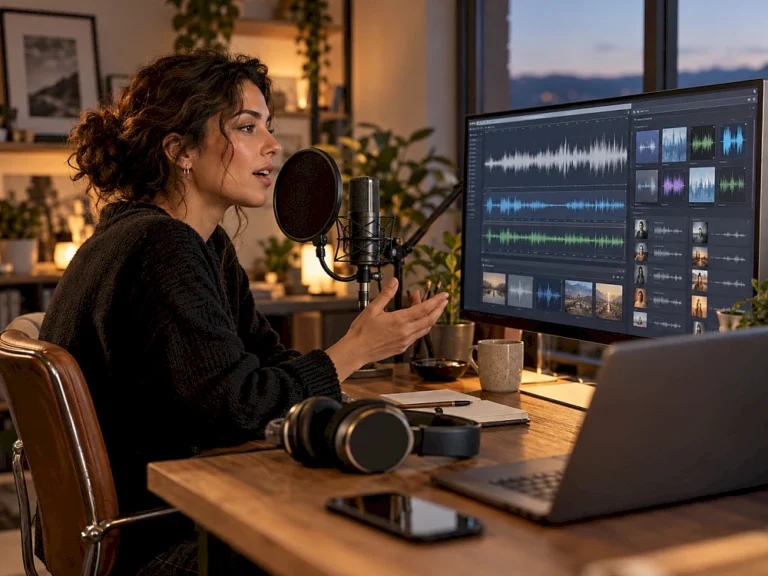
Will the Human Voice Become a Separate Digital Asset?
For most of recorded-music history, a voice was inseparable from a performance. A singer entered a studio, recorded a part, and the result was a specific recording. New lyrics, a different melody or another language normally required the person to…

Will AI Become a Standard Tool for Music Creation by 2030?
In June 2026, fully AI-generated music exceeded half of all new daily uploads to Deezer at peak, with roughly 90,000 such tracks arriving per day. Yet synthetic tracks accounted for only 1–3% of listening, while Deezer classified up to 85%…

How Does a Robot See the World Around It?
A person can walk into a room and almost instantly understand that there is a table, a door, a cup, another person and a clear path between the furniture. We rarely think about how much processing happens in that moment:…

How Long Should a Smartphone Last?
A decade ago, replacing a smartphone every two or three years felt almost normal. New models became visibly faster, cameras improved rapidly and software support often ended fairly early. In 2026, the situation is different: even a mid-range phone can…

Will Music Genres Disappear?
Not long ago, the answer to “What kind of music do you listen to?” could often be a single word: rock, pop, rap, metal or jazz. Today one playlist can move through electronic music, Afrobeats, hip-hop, indie pop, country and…

Can a Home PC Generate AI Video Without Cloud Services by 2030?
Generative video is still mostly associated with the cloud. A user opens a service, enters a prompt, sends the request to a data center and receives a clip later. Expensive GPUs do the work behind the scenes, while the user…

Will AI Fully Edit Video on a Home PC by 2030?
Only a few years ago, automated video editing mostly meant templates: a program could cut footage to music, stabilize a shot or generate subtitles. By 2026, the boundary has moved. DaVinci Resolve already uses AI for script and transcript workflows,…

Can AI Run on a PC Completely Offline by 2030?
Imagine an ordinary day in 2030: the internet is down, yet you ask the AI on your laptop to find a document, summarize twenty pages, translate an email, analyze a photo and transcribe a voice recording. Today many users would…

Will AI Influencers Replace Human Influencers by 2035?
China’s livestream-shopping market already offers a glimpse of the next decade’s creator conflict. A digital host can stay on air around the clock, does not get tired, does not negotiate a fee for every stream and can be scaled across…

Will We Still Need Smartphones in 2041?
In 2011, the smartphone still did not look like a device around which everyday life would be organized. Only 35% of U.S. adults owned one. By 2025, that figure had risen to 91%. In less than a decade and a…
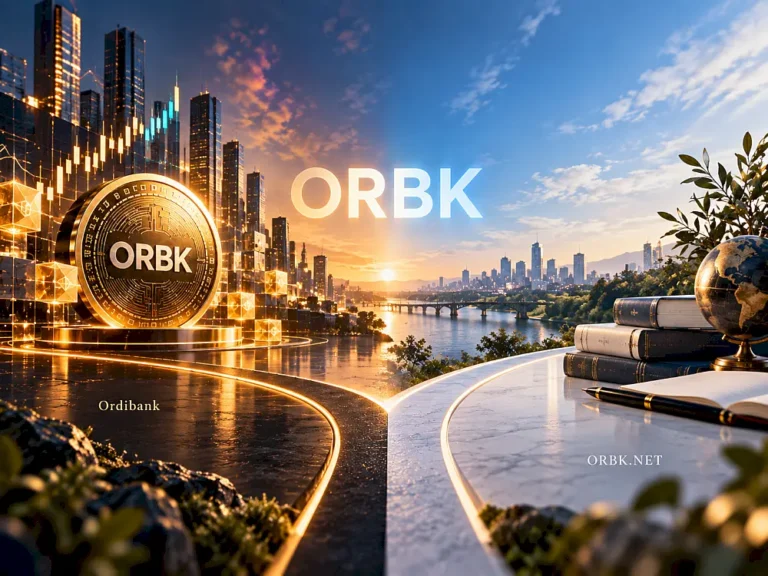
What Is ORBK? The Difference Between Ordibank and ORBK.NET
A search for just four letters — ORBK — can lead to two completely different things. One is Ordibank, a crypto project with the ORBK token. The other is ORBK.NET, a website whose domain has existed since 2009 and which…
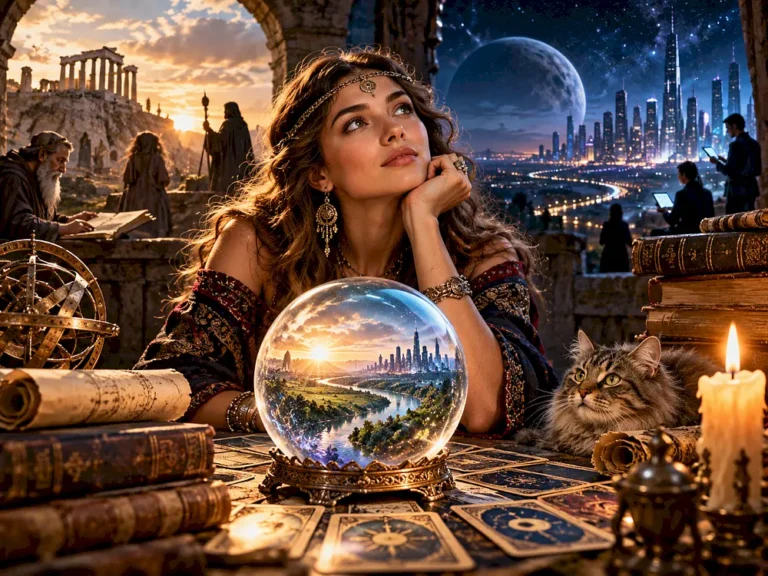
Why Humans Have Always Tried to Predict the Future
Human beings rarely live only in the present. We buy food for the days ahead, save money, check the weather, plan holidays, choose careers, take out loans, start businesses and decide where to live. Behind all of these choices is…

Will Spring Start Earlier Than Usual in Ukraine in 2027?
Spring does not begin on March 1 simply because the calendar says so. Meteorologically, it begins when the daily mean temperature makes a sustained move above 0 °C. In 2027 that transition may come earlier than usual across much of…
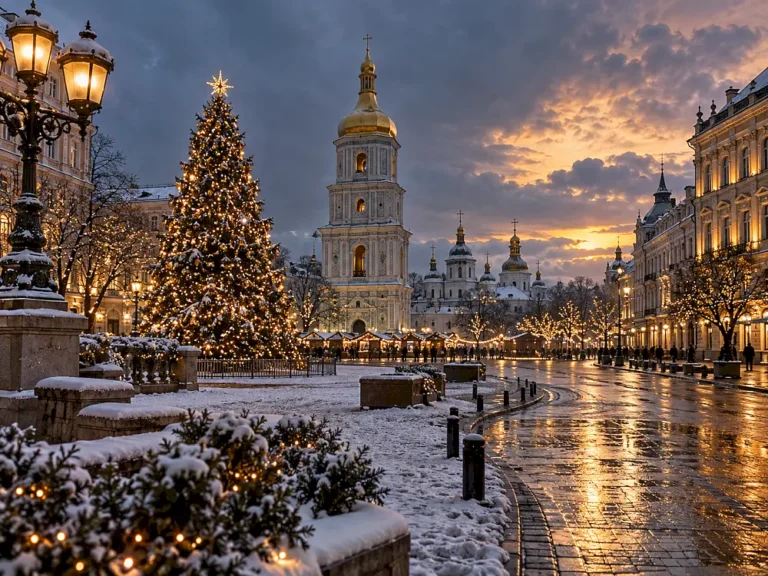
Will There Be Snow in Ukraine on New Year’s Day 2027?
A white New Year can no longer be treated as a given in Ukraine. Snow in the Carpathians or the north is quite plausible, but the chance that most of the country is snow-covered on the morning of January 1,…
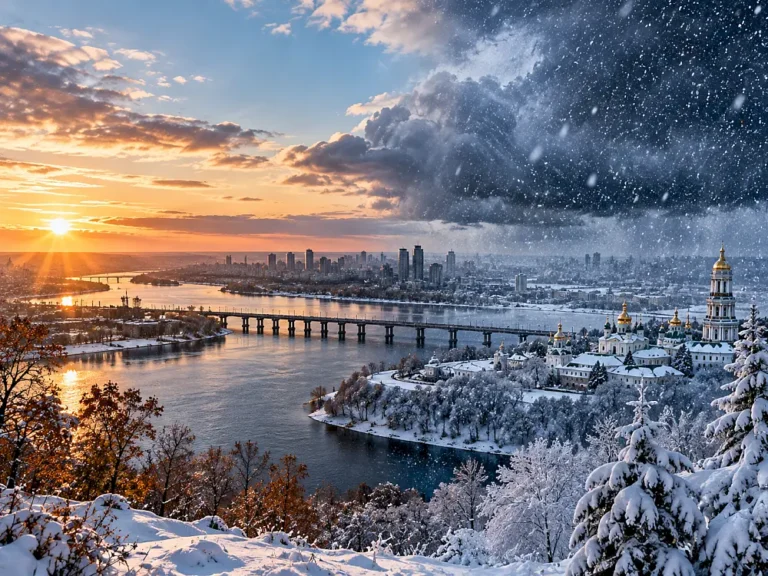
Will Ukraine Have a Warm Winter in 2026–2027?
Early seasonal models are leaning toward a mild European winter. Ukraine also currently has a warmer-than-normal base case, but that does not rule out snow, hard frosts or several sharp cold spells. At the end of September, no one can…